

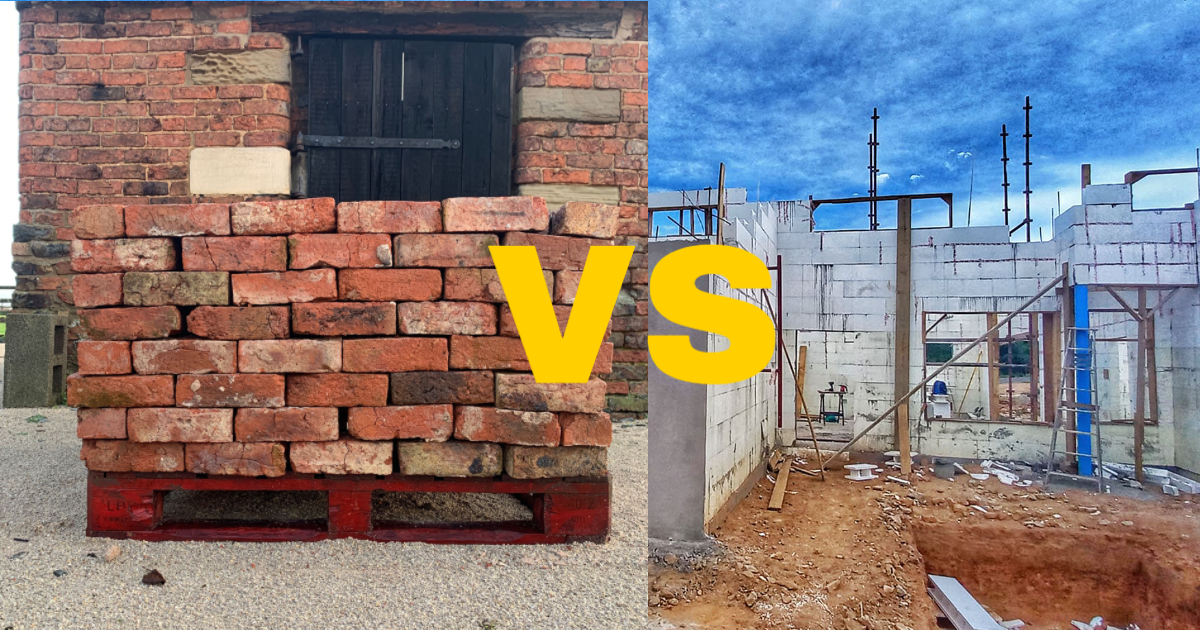
South Africa is no stranger to power outages, or loadshedding, which can severely impact daily life and business operations. As a result, choosing the right building material is critical to ensure energy efficiency and comfort especially during loadshedding. Polyblock Insulated concrete forms (ICFs) and brick and mortar are two different building materials used in South Africa, each with its own pros and cons.
What Are Polyblock ICFs?
Polyblock ICFs are interlocking modular units made from expanded polystyrene (EPS) foam, which are filled with reinforced concrete to create a structural wall system that provides insulation, energy efficiency, and durability. Polyblock ICFs can be used for a wide range of construction projects, including residential, commercial, and industrial buildings. They are suitable for both above-grade and below-grade construction. Here are a few key reasons why Polyblock ICFs are the wiser choice.
Why Polyblock ICFs Are Better
Energy Efficiency
South Africa is known for its hot summers and cold winters, making insulation crucial for energy efficiency. Polyblock ICFs provide excellent insulation, resulting in less energy consumption for temperature control during loadshedding. On the other hand, brick and mortar have poor insulation properties, resulting in higher energy consumption and costs.
Strength and Durability
South Africa also experiences natural disasters such as earthquakes and heavy rainfall. Both ICFs and brick and mortar offer durability and resistance to natural disasters. However, Polyblock ICFs are more resistant to moisture, which can prevent mold growth, a widespread problem during humid conditions.
Noise Reduction
Noise pollution can impact the comfort of residents and businesses, particularly in urban areas where noise levels are high. Polyblock ICFs provide excellent noise reduction, making them an ideal option for homes, hospitals, and schools located in areas with high noise levels. Brick and mortar also offer some noise reduction, but it is not as effective as Polyblock ICFs.
Fire Resistance
South Africa is prone to wildfires, making fire resistance an important consideration. Both ICFs and brick and mortar are fire-resistant and can withstand hot temperatures for extended periods. However, Polyblock ICFs are more fire-resistant than brick and mortar.
Speed and Ease of Construction
Loadshedding can cause delays in construction, making the speed and ease of construction crucial factors to consider. Polyblock ICFs are quick and easy to assemble, reducing the time and labor required for construction. Brick and mortar construction is labor-intensive, and loadshedding can further prolong the construction period.
Design Flexibility
South Africa’s unique architectural styles require a building material that is flexible and can cater to various design needs. Polyblock ICFs can be customized to fit specific design needs, including curved walls and unique shapes. Brick and mortar are versatile but can be challenging to work with when it comes to non-standard designs.
Sustainability
South Africa needs more sustainability, and building materials that promote sustainability are becoming increasingly popular. ICFs are made from recycled materials, can be reused or recycled at the end of their lifespan, and promote energy efficiency. Brick and mortar, while durable, are not as sustainable and contribute to waste in the long run.
Conclusion
Overall, both insulated concrete forms and brick and mortar have their advantages and disadvantages. However, in loadshedding-prone South Africa, ICFs are the better choice due to their energy efficiency, noise reduction, fire resistance, speed of construction, and sustainability. With the country’s energy crisis, choosing the right building material can make a significant difference in reducing energy consumption and ensuring comfort during power outages.
Are you ready to start your next construction project using Insulated Concrete Forms? Contact us today to learn more about the benefits of ICFs and how they can be incorporated into your building design. Our team of experts is ready to help you build a durable, energy-efficient, and eco-friendly structure that you can be proud of for years to come. Let’s get started!